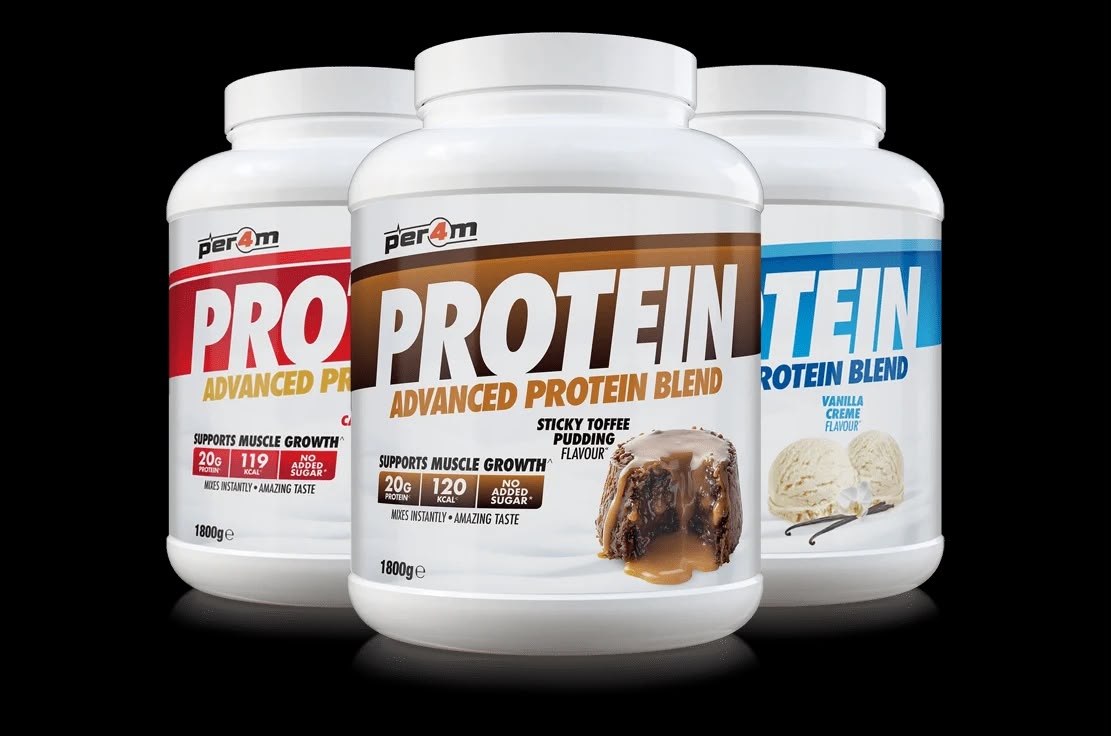
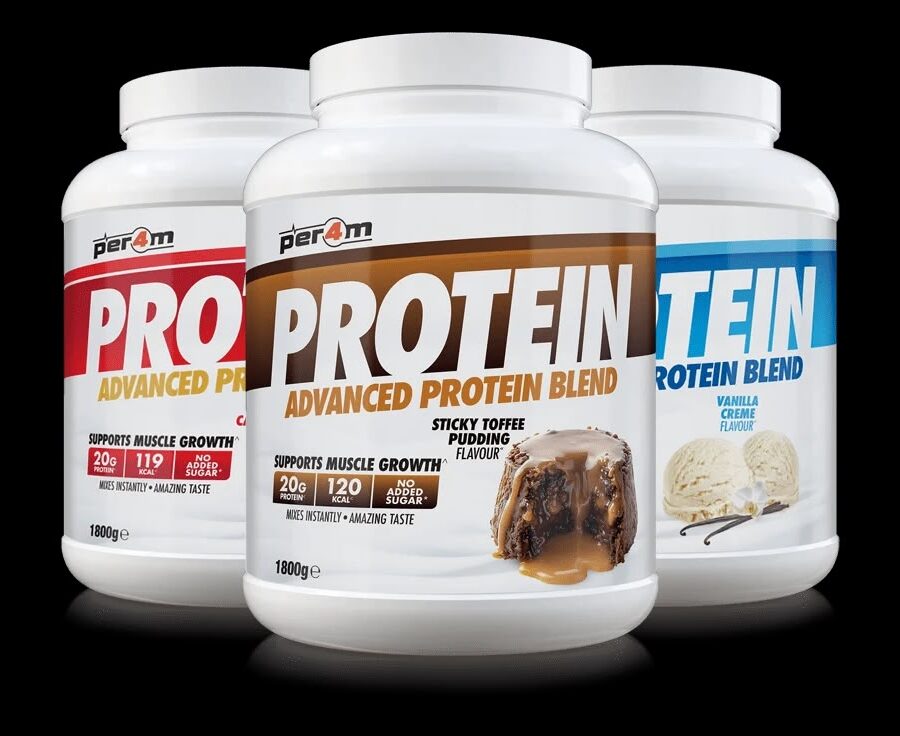
I think it’s important to explain what this product is, because it’s very easy to confuse it with Per4m’s Advanced Whey Protein – and they’re not the same thing.
Advanced Protein is essentially Per4m’s more affordable everyday option. Instead of being predominantly whey based, you’re getting a blend of five different protein sources including whey concentrate, milk protein, casein, egg white and whey isolate.
One thing worth considering is digestion. If you digest dairy well, I wouldn’t expect any problems with this at all. However, because Advanced Protein contains skimmed milk powder, milk protein and casein alongside whey, anyone who tends to experience bloating or digestive discomfort from milk-based shakes may find Advanced Whey a little easier to tolerate.
Does that automatically make it an inferior protein? I don’t think it does.
Whey is particularly useful around training because it’s rapidly digested, rich in essential amino acids and produces a rapid rise in amino acids in the bloodstream. Advanced Whey would therefore still be my preference if somebody specifically wanted a traditional whey protein for post-workout use.
Advanced Protein gives you a mixture of faster and slower digesting proteins. The casein and milk proteins digest more slowly than whey, while egg and whey provide additional complete protein sources. Interestingly, research comparing different dairy proteins after exercise suggests that whey isn’t automatically superior when the thing we’re ultimately interested in is stimulating muscle protein synthesis.
So in the real world, I wouldn’t expect somebody who swapped Advanced Whey for Advanced Protein to suddenly notice poorer recovery or stop building muscle.
If you’re particularly fussy about maximising the speed of amino acid delivery immediately after training, I’d still choose AdvancedThe biggest factor by far is whether you’re consistently consuming enough good-quality protein across the entire day. If this cheaper product makes that easier to achieve, it’s doing exactly what you need it to do.
If you simply want a good-quality, great tasting protein powder to help you reach your daily protein target without spending quite as much money, I think Advanced Protein makes a lot of sense.
And that, I suspect, is exactly why Per4m have introduced it.
The Science:
Myofibrillar and mitochondrial protein synthesis rates do not differ in young men following the ingestion of carbohydrate with milk protein, whey, or micellar casein after concurrent resistance and endurance-type exercise
Study: Researchers compared 20g of milk protein, whey protein and micellar casein during recovery from combined resistance and endurance exercise. Importantly for this particular product, all three of those protein sources are present in Per4m Advanced Protein.
The Journal of Nutrition, 2019
https://pubmed.ncbi.nlm.nih.gov/30698725/
Despite differences in how quickly the different proteins increased blood leucine levels, muscle protein synthesis over the six-hour recovery period did not significantly differ between milk protein, whey or casein. When the protein groups were combined, protein produced significantly greater myofibrillar protein synthesis than carbohydrate alone. This is particularly relevant to Advanced Protein because it supports the idea that its mixture of whey, milk and casein proteins can still effectively support post-exercise muscle protein synthesis.
The impact of dietary protein supplementation on recovery from resistance exercise-induced muscle damage: A systematic review with meta-analysis
Study: This systematic review and meta-analysis examined 29 studies investigating protein supplementation around resistance exercise and subsequent recovery from exercise-induced muscle damage.
European Journal of Clinical Nutrition, 2023
https://pubmed.ncbi.nlm.nih.gov/36513777/
Protein supplementation produced beneficial effects on the recovery of maximal muscular strength at several time points following resistance exercise and may help reduce increases in creatine kinase. It did not significantly reduce muscle soreness, which is worth being clear about. Overall, the evidence supports adequate protein intake as part of recovery from resistance training, without suggesting that taking a protein shake magically eliminates post-training soreness.